
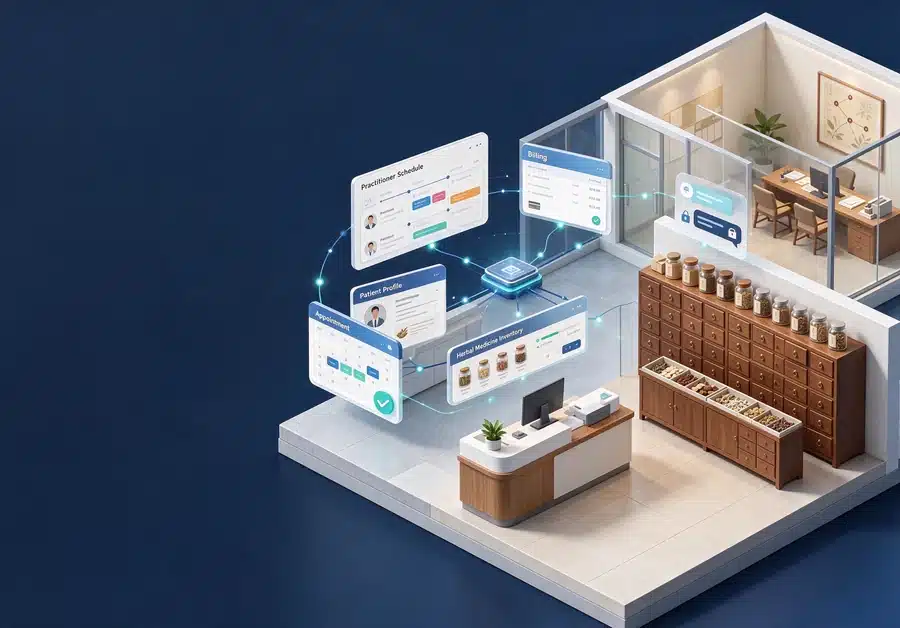
For many TCM clinics in Hong Kong, the daily work is not just about arranging appointments and receiving patients, but also includes doctor scheduling, visit records, TCM and medicinal material management, charges, follow-up reminders and client follow-up. When the clinic has only one physician or a small number of patients per day, the use of paper, Excel and WhatsApp may still be able to cope;
For example, the front desk cannot immediately confirm a doctor’s appointment time; patient information is scattered in different forms; consultation records need to be searched repeatedly; herbal inventory does not match the actual usage; These problems do not necessarily mean that colleagues are not attentive enough, but that the clinic needs a more complete system of TCM clinics to centralize daily processes.
The TCM clinic system is not just an appointment tool
A practical TCM clinic system should start with an appointment and gradually connect patient information, physician arrangements, visit records, herbs or products, charges and subsequent follow-up. The focus is not just on moving paper data to computers, but enabling front desk, physician, pharmacy or dispensing colleagues and management to use the same more consistent set of data as per permission.
The clinic can manage the following processes according to actual business needs:
Patient and Client Information
Bookings, rescheduling and cancellations
Physician, therapist and room scheduling
Consultation and service records
Information on Chinese herbs, medicinal materials or retail products
Dispensing, collection and inventory records
Charges, Payments and Invoices
Follow-up visits, renewals and customer reminders
Follow up by customers on WhatsApp or other channels
The actual functions and data fields shall be designed in accordance with the clinic’s service model, internal processes and privacy requirements.
Ⅰ. centralized management of patient data to reduce repeated inquiries at the front desk
Patient information is the basis of the clinic’s daily services. The system can centrally preserve basic patient information, contact details, sources, appointment records, service records and related remarks. When patients come again, the front desk can find existing information faster, reducing repeated file creation.
For practices with multiple physicians or different services, the system can also view historical records by patient, physician, service item, or date. When a patient needs to reschedule, inquire about their last service, or schedule their next visit, the front desk doesn’t need to look back and forth between multiple paper or private messages.
However, patient data involves sensitive personal information, and clinics need to set clear account permissions. The information that the front desk, physicians, dispensing colleagues and management can view or modify may not necessarily be exactly the same.
Ⅱ. booking and scheduling: Check the doctor, room and service hours at the same time
Appointments at a TCM clinic do not only involve a schedule, but may also involve the doctor, room, service hours, treatment equipment and different service types. If only a shared calendar is used, the front desk can easily need to reconfirm item by item when a patient requests a rescheduling or temporary physician change.
The TCM clinic system can manage appointments by doctor, room, service item and available time slot. The front desk can view appointments for the day and in the future to learn which slots are full and which are still available for new patients. The clinic can also handle rescheduling, cancellation, lateness and waiting arrangements in accordance with established rules.
If the clinic has multiple physicians, management can have a clearer grasp of the appointment volume, service hours and working arrangements of different physicians. This does not mean that the system replaces professional judgment in the clinic, but rather assists the front desk and management in reducing duplicate confirmation in administration.
Ⅲ. consultation and service records: Allow data to be kept centralized according to permissions
After the patient completes a visit or service, relevant records need to be kept in accordance with the practice’s actual practice. The system can design corresponding fields to allow authorized medical colleagues to record the date of service, related content, follow-up arrangements and remarks.
Recordings may differ from practice to practice, and therefore an identical set of tables should not be applied directly. It is safer to learn about the practice’s existing paper, Excel, or other recording methods before deciding which fields need to be electronic, what data needs to be restricted access, and what content needs to be confirmed by an eligible medical colleague.
The role of the system is to assist in the organization and preservation of data and does not mean to replace the diagnosis, prescription or treatment judgment of the physician. Any medically related decisions should still be handled by an eligible professional in accordance with the practice’s professional and internal rules and regulations.
Ⅳ. Management of Chinese herbs and medicinal materials: Connect inventory and collection processes from product data
If the clinic also offers Chinese herbs, herbs, health products or other retail products, product information and inventory management will directly affect day-to-day operations. Differences are susceptible to procurement, dispensing and inventory when the same product uses different names, numbers or units in different forms.
The system can centrally manage product or medicinal materials name, number, classification, unit, supplier, selling price, purchase price and inventory information. When the diagnosis or dispensing process involves a relevant product, the front desk or dispensing colleague can view the required information and record access or sales according to the authority.
If certain goods require batches, expiry dates, inspections, or special preservation requirements, the clinic can first sort out the actual needs before evaluating what information the system should hold. The goal of inventory management, is to let the clinic know what is currently available, how much is used, what needs to be restocked, and whether relevant information needs to be reviewed by designated colleagues.
Ⅴ. Charges and Invoices: Reduce the duplicate logarithm of front desk and finance
Charges for a TCM clinic may include consultation fees, treatment services, TCM, medicinal herbs, products, or other items. If the front desk charges are then reorganized from different forms by financial colleagues, it is easier to spend more time at the daily and monthly closings.
The TCM clinic system can link patient, service, product and charging information, allowing the front desk to record payments and invoices according to the actual items. Management can also view transaction data by date, physician, type of service, or payment status.
The actual accounting and tax treatment will still need to be arranged in accordance with the financial systems, internal processes and professional advice used by the clinic. The system can assist in the preservation and organization of operational data but should not make tax or accounting commitments without recognition.
Ⅵ. WhatsApp and return visit reminders: Give customers a more documented follow-up
Many clinics use WhatsApp to confirm appointments with patients, process rescheduling, notify medication pickup, or follow-up visits. If the message stays only within the cell phone of an individual coworker, it will be difficult for others to take over completely when the coworker is on vacation, changing shifts or leaving.
With the right CRM or clinic system integration, clinics can keep customer contact and follow-up records as per authority. The front desk can check the status of the appointment, and the responsible colleague can record whether the patient has been confirmed, whether the appointment needs to be rescheduled, and who will handle it next.
If the clinic needs to access WhatsApp to the system, the account, message saving, data permissions and usage rules should also be confirmed first. WhatsApp can be used as a communication channel, but content involving patient information still needs to be handled in accordance with the clinic’s privacy and security policies, and all sensitive information should not be used directly as a general promotional message.
Ⅶ. What clinic operating information can management check?
Once the booking, patient, service, product, inventory and charge data are centralized, management can view operations as they actually need, e.g.
Number of daily and weekly appointments
Rescheduling and cancellation
Distribution of appointments for different physicians or services
Patient follow-up and follow-up status
Inventory of Chinese herbs, medicinal materials or products
Products that need to be restocked or re-examined
Charge information for different services and products
Unfinished customer follow-up
The more the report should not be the better. The clinic can start with the most needed information and adjust it gradually according to the use of management and frontline colleagues.
Ⅷ. What should clinics organize before introducing the TCM clinic system?
Before choosing a system, the clinic can organize its existing processes and pain points:
Who is the patient data currently created and updated by?
Does the appointment involve multiple physicians, rooms, or different hours of service?
How are rescheduling, cancellations and waiting appointments usually handled?
What records of visits or services need to be kept?
How is quantity and access recorded for Chinese herbs, medicinal materials and products?
What information is limited to a physician or designated colleague?
Which department is responsible for charging, payment and invoices?
How many colleagues use WhatsApp and how to hand it over?
Does the clinic need to connect to an existing finance, website, or APP?
What data does management most want to see first?
After sorting it out, you can determine whether you should handle appointments, patient information, charges, inventory, or WhatsApp follow-up first. Enterprises do not necessarily have to enable all features at once and can be phased in by clinic size, departmental collaboration and data readiness.
Conclusion: Let TCM clinics move from fragmented records to clear management
The value of a TCM clinic system is not just to move appointments from paper to computer, but to connect patients, physicians, services, herbs, inventory, charging and follow-up processes.
From the time of appointment, the front desk can check the doctor and service hours; after the appointment, authorized colleagues can keep relevant service records; Chinese medicines and products can be coordinated with inventory and access management;
Adaptive can help plan customer information, appointments, service records, product inventory, charges, WhatsApp and related management processes according to the actual working methods of TCM clinics. Actual functions, data fields, permissions and integrations should be configured after understanding the needs of the clinic.
Frequently Asked Questions (FAQ)
Q: Can the TCM clinic system manage appointments?
A: Patients, physicians, rooms, service items and available appointments can be managed according to clinic processes, and rescheduling, cancellation and follow-up arrangements can be processed as needed. Actual booking rules need to be set in accordance with how the clinic currently operates.
Q: Can the system keep the visit records?
A: Relevant data fields and permissions can be designed according to the needs of the clinic, and the service content and subsequent arrangements can be recorded by an authorized medical colleague. The system only assists with data management and does not replace the professional judgment of the physician.
Q: Can the inventory of Chinese herbs and herbs be managed?
Answer: It can be managed by product, medicinal material, unit, supplier and inventory process. Where batches, expiration dates, tests or special preservation requirements are involved, information and procedures should be confirmed first as required by the clinic.
Q: Can the system process charges and invoices?
Answer: Service, product, payment and invoice information can be recorded according to the clinic process, and the front desk and management can be assisted in viewing transaction records. Formal processing involving accounting or taxation should be matched with the clinic’s financial processes and professional advice.
Q: Can I use WhatsApp for appointments and follow-up at TCM clinics?
A: WhatsApp can be used as a channel for appointment confirmation, rescheduling, medication collection or general follow-up according to the system configuration and the clinic’s privacy policy. Clear account permissions and data security rules should be set when patient data is involved.
Q: Do small TCM clinics need to introduce a complete system?
A: It is not necessary to enable all features at once. Small clinics can start with one of the core processes of appointments, patient information or charges, and then gradually add product, inventory, WhatsApp and report management according to actual usage.