

One-stop automated management of customer policy commission documents
Starting from HK$1,000, you can launch your own intelligent management system and make efficient operations within reach.
Many manual processes, high management difficulty
The document center provides centralized storage and version control, and operation records are traceable, ensuring accuracy and compliance.
Our insurance brokerage business management system is a comprehensive solution designed specifically for insurance intermediaries, helping companies effectively manage and organize their insurance business processes.
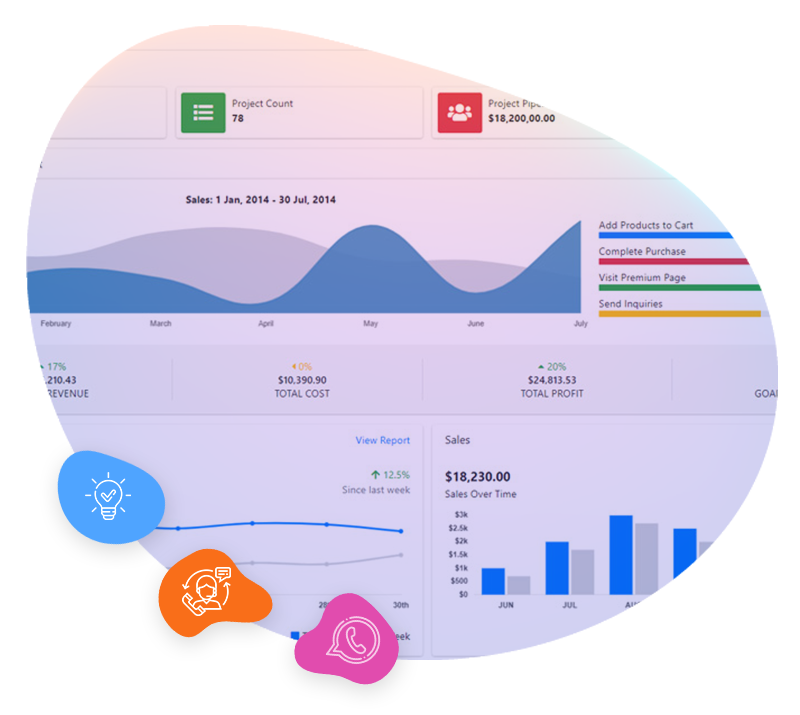
This management system aims to provide insurance intermediaries with a comprehensive tool to help manage business processes such as clients, policies, commissions, finance, and data analysis, thereby improving efficiency, enhancing service quality, and achieving business growth.

Centralized management of customer data, including personal information, policy records, contact history, etc.

Policies are categorized into general insurance, life insurance, medical insurance, and mandatory provident fund, etc., for easier unified management and inquiry.

Remind and track policy updates and renewals to ensure timely processing and avoid missing important deadlines.

Manage and store relevant insurance documents, including application forms, declarations, and insurance terms.

Track and manage customer purchase cases, including detailed information such as insurance type, insured amount, and beneficiary.

Supports multiple commission providers, allows flexible adjustment of commission rates, and automatically calculates and tracks commission amounts.

Integrated accounting functions facilitate the management of financial records, income and expenditure statements, and settlements.

Generate various reports, such as performance reports, sales reports, and policy statistics reports, to help analyze business performance.
If renewal tracking depends on manually opening each policy record one by one, the more clients and policies you manage, the easier it is to miss one — and a missed renewal can mean a late follow-up with the client.
1. All policies visible under one client — When you look up a client, can you see all their related policies together — type, insurer, and expiry date — without first needing to know each policy number just to pull up the details?
2. Renewals surfaced by expiry date, not by manual search — Can you select a date range and see which policies are coming up for renewal, what the current follow-up status is, and who’s responsible for each? This is what turns “checking policies one by one” into an actual, usable follow-up list.
Worth testing directly: can you distinguish between a client who hasn’t responded yet, one who’s waiting on a quote, one who’s still deciding, and one who has already renewed? From first contact, to quotation, to the final renewal outcome — can you trace the full progress in one place, rather than just knowing a reminder was sent?
Sending a reminder is only the first step. What actually prevents a missed renewal is knowing, at any point, exactly where each policy stands in the follow-up process — not just that a message went out.
General
Not necessarily a full replacement. Depending on what’s missing, adding specific features or connecting your existing system with other tools may be enough. Worth reviewing what your current system handles well and where the gaps are before deciding.
Don’t just watch a general walkthrough — test the specific things that matter: can you pull up every policy under one client without knowing policy numbers in advance; can you filter policies by expiry date into a real follow-up list; does the follow-up status (contacted, quoted, deciding, renewed) update and stay traceable over time. A demo that looks smooth on the surface may still have gaps between these steps.