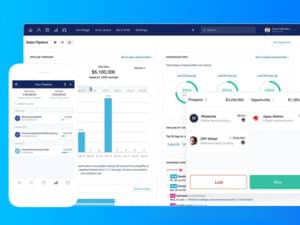

A truly useful customer profile should enable employees to quickly grasp a customer’s background, needs, and the next steps to take.
Many businesses mistakenly believe that having a list of customers is the same as having a CRM system. In reality, a simple collection of names, phone numbers, and email addresses can only answer the question, “Who is the customer?”—it fails to address “What has happened with the customer recently?” or “What should we do next?”
A comprehensive 360° view of a customer typically includes basic profile information, acquisition channels, conversation history, quotes and orders, service records, payment status, the staff member in charge, and the date for the next follow-up. This data is particularly crucial for businesses that require long-term relationship building, such as those in professional services, education, insurance, or B2B trade.
Once data is consolidated, businesses can more easily categorize their customers. For instance, they can separate prospects who have received a quote but haven’t yet made a purchase, share relevant information with clients who have previously used specific services, or set follow-up reminders for customers with whom there has been no recent interaction. This does not mean that every customer receives the same promotional content; rather, it ensures that communication is better tailored to each customer’s current needs.
When building a 360-degree view of customers, companies should first determine which data truly impacts sales and service, then define the corresponding fields, access permissions, and responsibilities for updates. More data does not necessarily mean better data; the priority is ensuring that information is reliable, easily searchable, and capable of driving the next steps in a process. Adaptive can help businesses construct a more comprehensive customer management framework tailored to their specific sales, service, and order workflows.
Frequently Asked Questions (FAQ)
Q: What information is included in a 360° customer view?
A: This typically includes basic customer information, lead sources, conversation records, quotes, orders, service records, the person in charge, and next steps for follow-up.
Q: Is it better to have as much customer data as possible?
A: Not necessarily. The most important thing is that the information is accurate, easy to search for, and helpful to employees in carrying out their sales or service tasks.
Q: Can different departments share customer data?
A: Yes, but access permissions should be set based on job roles, ensuring that employees can only view the information necessary to complete their work.
Still unsure which solution is right for your business? Contact Adaptive to schedule a free 30-minute consultation and discover the digital solution that best fits your needs.
Contact Us
Company name:Adaptive Consultants Limited
Phone:+852 5209 7807
Email:tiffanycheng@adaptivegp.com
For other inquiries, please call +852 2132 5513 or contact us via WhatsApp for a real-time response.