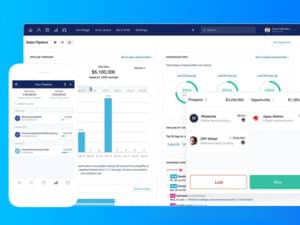

A sales funnel is not just a pretty chart; it is a common language that lets the team know how each sales opportunity is progressing.
If a sales team simply marks every opportunity as “in follow-up,” management cannot discern whether a deal is in the initial inquiry stage, at the proposal/quotation stage, or awaiting a final decision from the client. When all cases are lumped under a single status, sales forecasting inevitably becomes inaccurate.
When designing a sales funnel, businesses should base it on the customer’s actual decision-making process. For instance, a service-oriented company might break the process down into stages such as new inquiry, needs identification, proposal, quotation, negotiation, closed deal, and lost opportunity.
Effective funnel management helps managers identify bottlenecks in the sales process. If a large number of opportunities remain stuck in the quotation stage for an extended period, the issue may lie in the speed of providing quotes, the clarity of the proposal, or the cadence of follow-ups. If many inquiries fail to progress to the stage of requirements confirmation, the problem might stem from how those inquiries are handled or how potential clients are qualified and routed. These observations allow for the early detection of risks—well before looking at monthly revenue figures alone would reveal them.
Companies can also establish distinct funnels for different services, while regularly reviewing conversion rates and the time spent at each stage. By clearly defining these processes and utilizing a CRM system for tracking and reminders, teams can continuously improve their sales performance.
Adaptive CRM helps businesses connect leads, sales opportunities, quotes, and orders into a traceable sales process.
Frequently Asked Questions (FAQ)
Q: How many stages should a sales funnel have?
A: There is no fixed number; it should be designed according to the company’s actual sales process. Each stage must have clear entry criteria and defined next steps.
Q: Why do opportunities in the sales funnel often remain there for a long time?
A: This may be related to the speed of providing quotes, the clarity of the proposed solution, the client’s decision-making process, or a lack of clarity regarding responsibility for follow-ups; it is necessary to examine the time spent at each stage.
Q: Can CRM help with sales forecasting?
A: By leveraging opportunity stages, deal values, expected close dates, and historical conversion rates, businesses can generate more well-founded sales forecasts.